
TA PROM VILLAGE · CHI KRAENG DISTRICT · CAMBODIA
Soksabai Greens
Families living beside minefields cannot safely farm their own land. We bring the farm to them — passive hydroponic food gardens, no soil, no electricity, under $10 to start. A pathway out — not a handout.
The Problem
Mines make farming a life-or-death decision
Chi Kraeng District is among Cambodia’s most heavily UXO-contaminated areas. Families live beside fields they cannot safely enter.
No safe land to farm
UXO contamination locks families out of their own fields. Every vegetable must be bought at market — much of it imported, at prices set far from the village.
Children leaving school at Grade 7
School is free through Grade 6. Grade 7 is the first year families must pay — a true annual cost of $80–180 per child. For near-poor families, this is the moment education ends.
56% of income spent on food
In poor rural Cambodian households, roughly 56 cents of every dollar goes to food. On a monthly income of $150–180, little is left for school, health, or debt — and protein and vegetables are the first things cut.
Income improvement creates new danger
A family that saves enough to buy a tractor may trigger an anti-tank mine that has sat harmlessly underfoot for 40 years.
THE FAMILIES ARE THE MISSION — NOT A REVENUE SOURCE.
The Reality
Half of all UXO deaths happen off the map
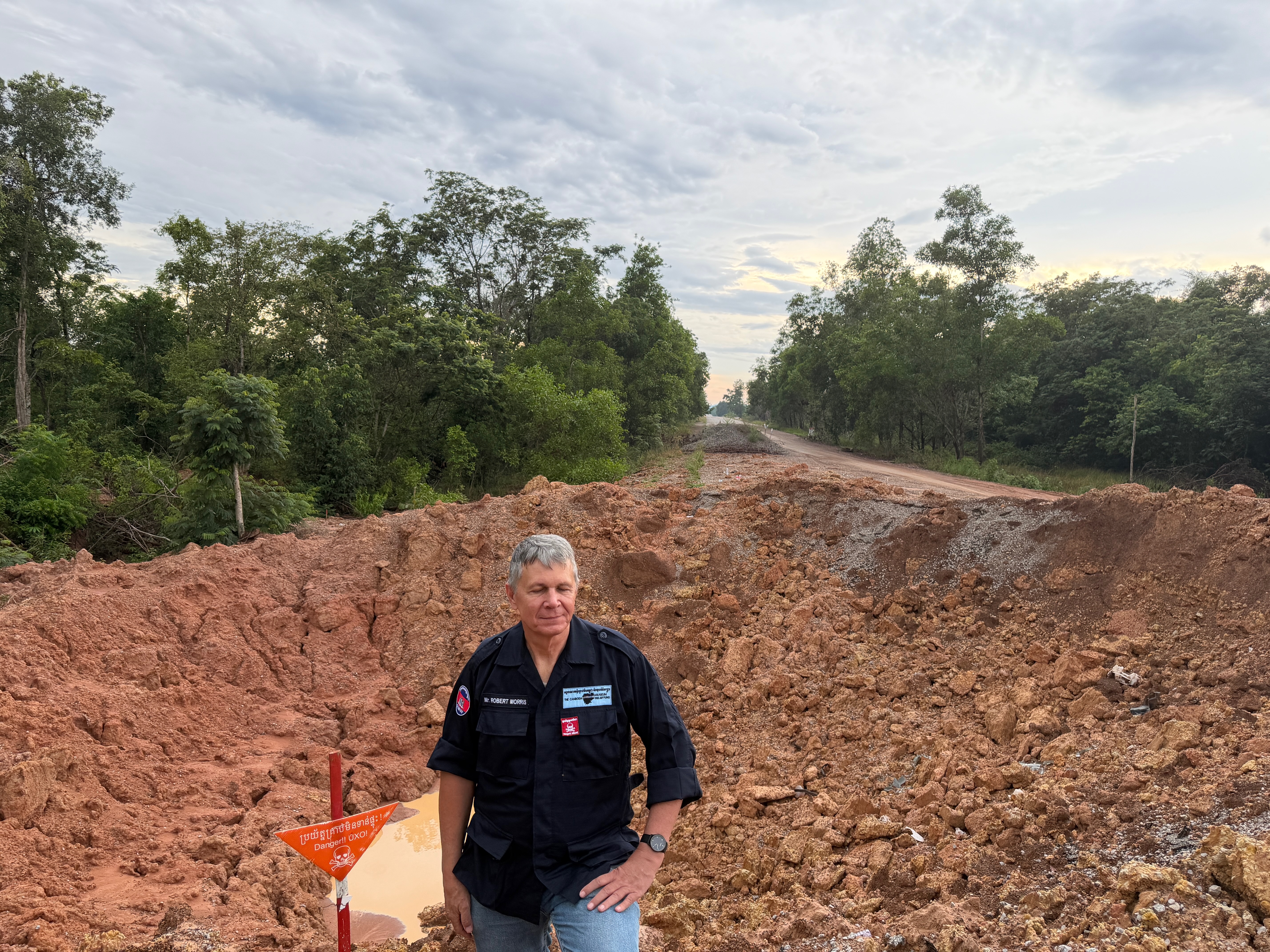
This sign marks a recognized danger zone. But half of all UXO accidents in Cambodia happen on land that carries no warning sign at all — land families assume is safe because no official record says otherwise.
The maps show land that has been formally searched and cleared. They cannot show what has never been searched. Cambodia’s demining program is one of the world’s most effective — and it is still working through a country-sized problem with limited resources.
Until land is formally searched, cleared, and released — it is not safe. It is simply unexamined.
A Real Incident
The pineapple farm that should have been safe
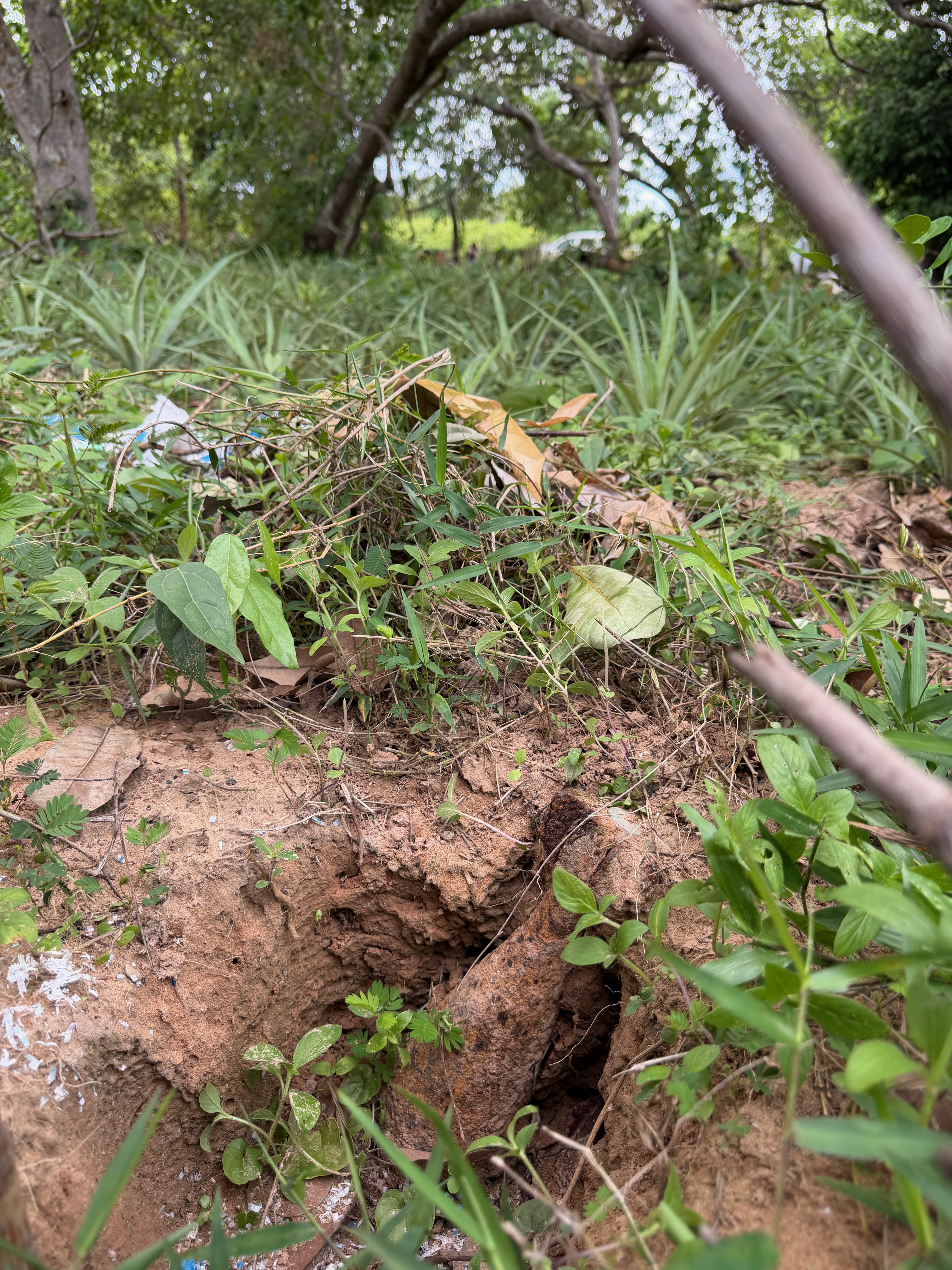
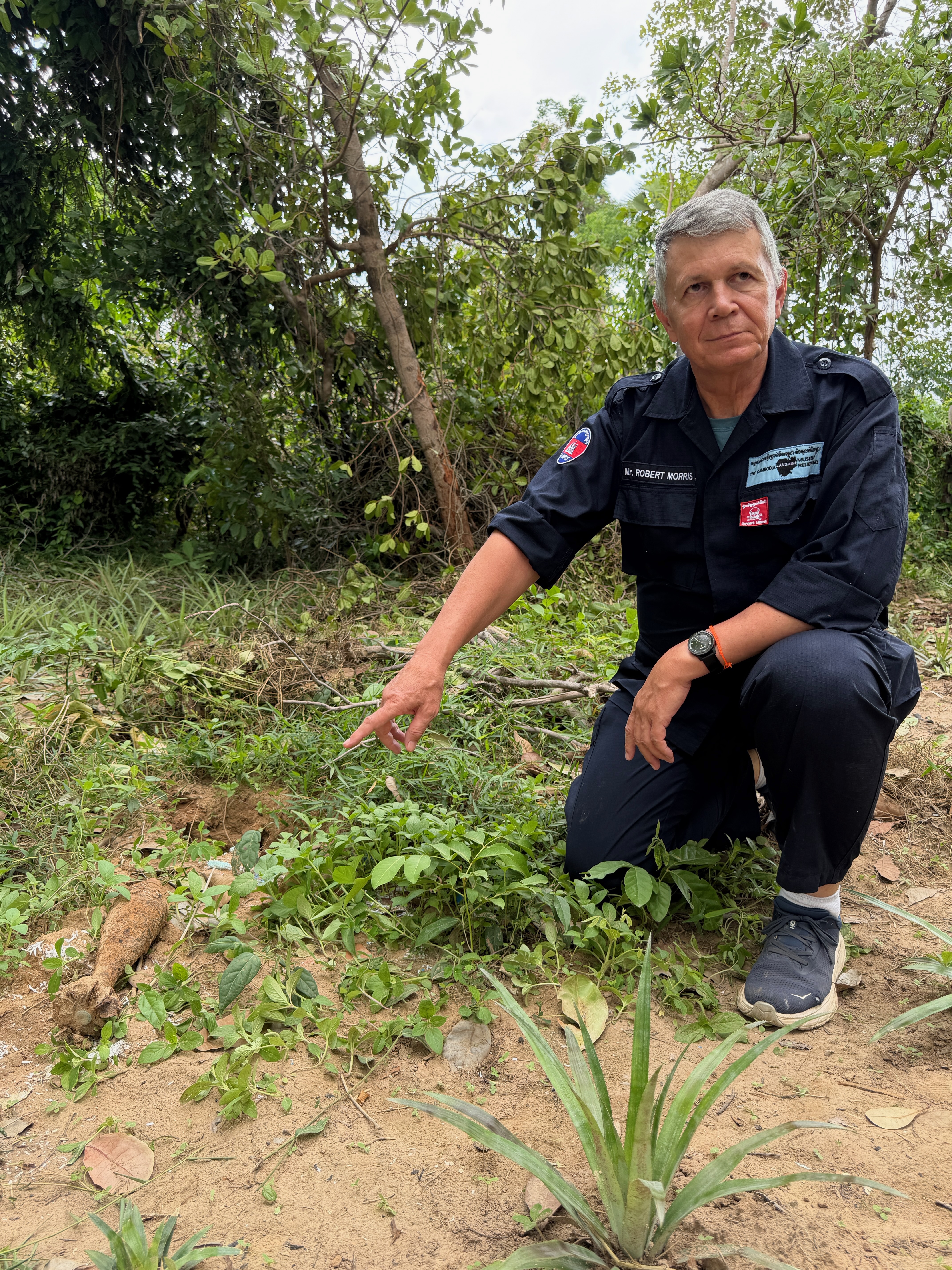
A farmer working a pineapple field struck a live mortar with his hoe. The land carried no official contamination designation — by every government record, it was clean.
We were nearby doing a land assessment when the police called. The mortar was defused and removed. The farmer walked away. He was lucky. The rest of his field still waits to be cleared — and he will return to farming it, because the alternative is not eating.
This is not unusual. This is how Cambodia’s UXO problem works in practice. Families farm land they cannot certify is safe because they have no alternative. They make that calculation every single season.
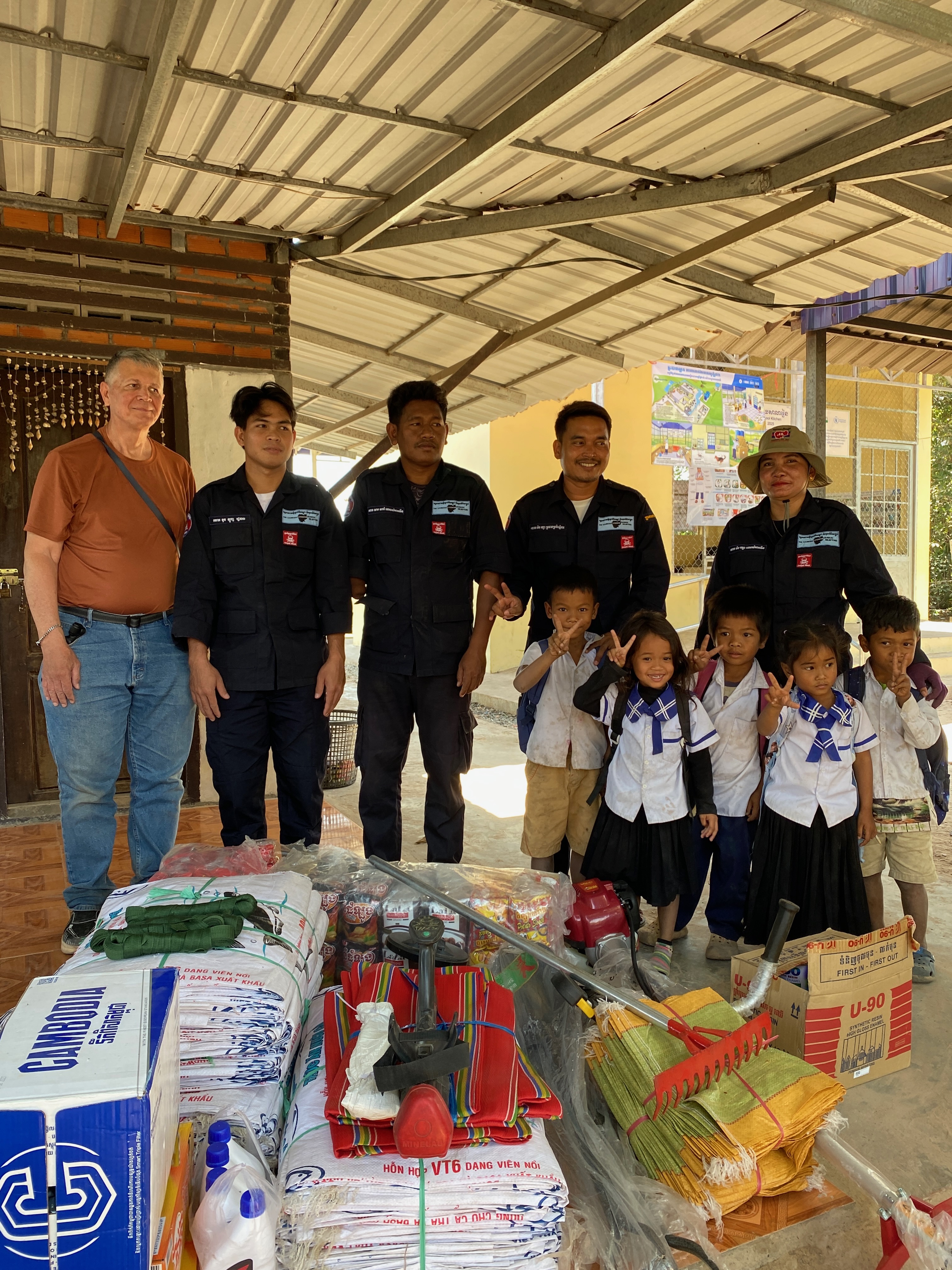
With the CLMMRF team and local children. The supplies were requested directly by the team for their clearance operations.
Before Soksabai Greens
A personal decision, not a program
This photo was taken before Soksabai Greens existed. The CLMMRF team needed specific supplies to continue their clearance operations. They told me what was needed. I bought it.
Not as a charity initiative. Not as part of a program. Because I was there, I knew the team, and the need was specific and clear.
Soksabai Greens is the formalization of that relationship — a permanent, self-funding mechanism that supports this work not through one-time donations, but through the consistent revenue of growing and selling food.
Help us build the training center
$44,000 starts this. A working teaching farm, starter kits for the first 20 pilot families growing food for their own table, and six months of operations to prove the model. This is a pilot designed to learn the challenges faced by these families learning new growing systems that work in their conditions.
Expansion to more families, more villages, and eventually more provinces will require additional investment rounds as we grow. But this program is built to become self-sustaining — not dependent on ongoing donations. Commercial farm revenue, produce buying margins, and nutrient resales are the funding engine. We are building toward the day we don’t need to ask.
This campaign starts that process.